
Until recently, I believed the better product would always win in the market. Same price, same shelf — if the quality is better, why would anyone buy another product?
That was before I read this book of Al Ries & Jack Trout and remembered again: customers don’t buy products — they buy brands, and being first in a category plays a huge role in that branding process.
What does being first mean? What is a category?
Let’s settle these two words first, just in case.
In this piece, being first doesn’t mean having the largest market share. It means being the first brand to enter a specific category and to be recognized by people as the category’s first mover.
What is a category? Simple. A category is a group of words that customers use to define a product.
Shampoo, shampoo for blonde women, shampoo for bald men, shampoo for Substack readers… Each of these is a different category.
Be first to capture customer’s mind!
Imagine someone experiencing a product or service that looks like nothing else. Within seconds, their brain starts scanning for familiar patterns — trying to match this new thing to something it already understands.
But if the mind can’t find a match, it freezes for a moment.
And that’s when the magic question appears: “What is it?”
When your product becomes the first recognizable example in a category, you have the chance to become the answer to that question. You’re not competing for attention — you’re defining what the thing is.
You fill that blank space in the customer’s mind, and from that moment on, your brand becomes the word people use to describe every product that follows. When they experience another brand in the same category, they’ll just say “Oh — it looks just like X!”
This is the advantage of first-mover brands, and you’ll understand it even better with the example below.
The Coca-Cola example
Coca-Cola was not the first soft drink, not the first soda, and it wasn’t even the first drink to use coca leaves (Vin Mariani, a French wine, used it before). Yet Coca-Cola’s taste was distinctive enough that the category eventually became known as cola.
For a beverage brand, having a unique taste is great! You can easily differentiate from others and enjoy being first in your own category. However, it’s not enough. In fact, it means nothing if you don’t reach customers.
In order to claim your ownership, you need to show your product and then ensure that customers associate that unique taste with your brand name. Coca-Cola was and still is great at doing that (enormous marketing and ad spending certainly helped).
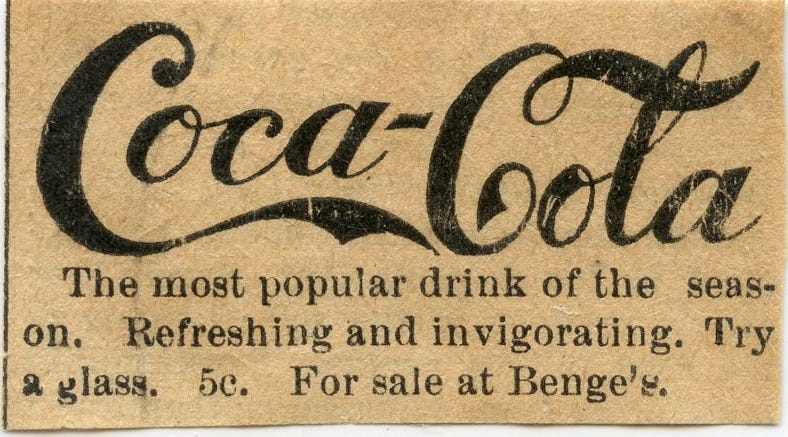
Do you think Coca-Cola used its first-mover advantage successfully? Let’s look at its biggest competitor to evaluate.
- Did Pepsi come too late to the category? Pepsi was founded in 1898, twelve years after Coca-Cola. Not a long time considering the conditions of that period.
- Would you say Coca-Cola tastes much better than Pepsi? Blind taste tests often show people can’t reliably tell the difference — and some even prefer Pepsi.
- Maybe Pepsi just doesn’t spend that much on marketing? It’s not easy to compare, but that doesn’t seem to be the case since PepsiCo had $3.9 billion in advertising expenses in 2024.
As you can see, even though Pepsi does all the right things, it’s not easy to take down a first-mover who owns the category so completely in customers’ minds. People have already associated that black-red, fizzy drink with the Coca-Cola name.
What should Pepsi do then — quit?
Of course not. Read on.
When someone gets there first
If you look at categories broadly, it’s easy to feel like every space is already taken.
Cola? Coca-Cola.
E-commerce? Amazon.
Search engine? Google.
That’s not true. There are always opportunities to find a category where you can be the first mover. All you have to do is narrow your focus.
You don’t need to be better — just be different, and take a space.
When IBM dominated the computer category, computers were seen as business tools. Then Apple came along and said, “We make personal computers.”
When Kodak ruled the camera market, Polaroid said, “We’ll give you photos instantly.” Years later, some people realized Kodak cameras weren’t suited for every situation — especially for action. That’s when GoPro appeared and said, “We’ll let you record hands-free.”
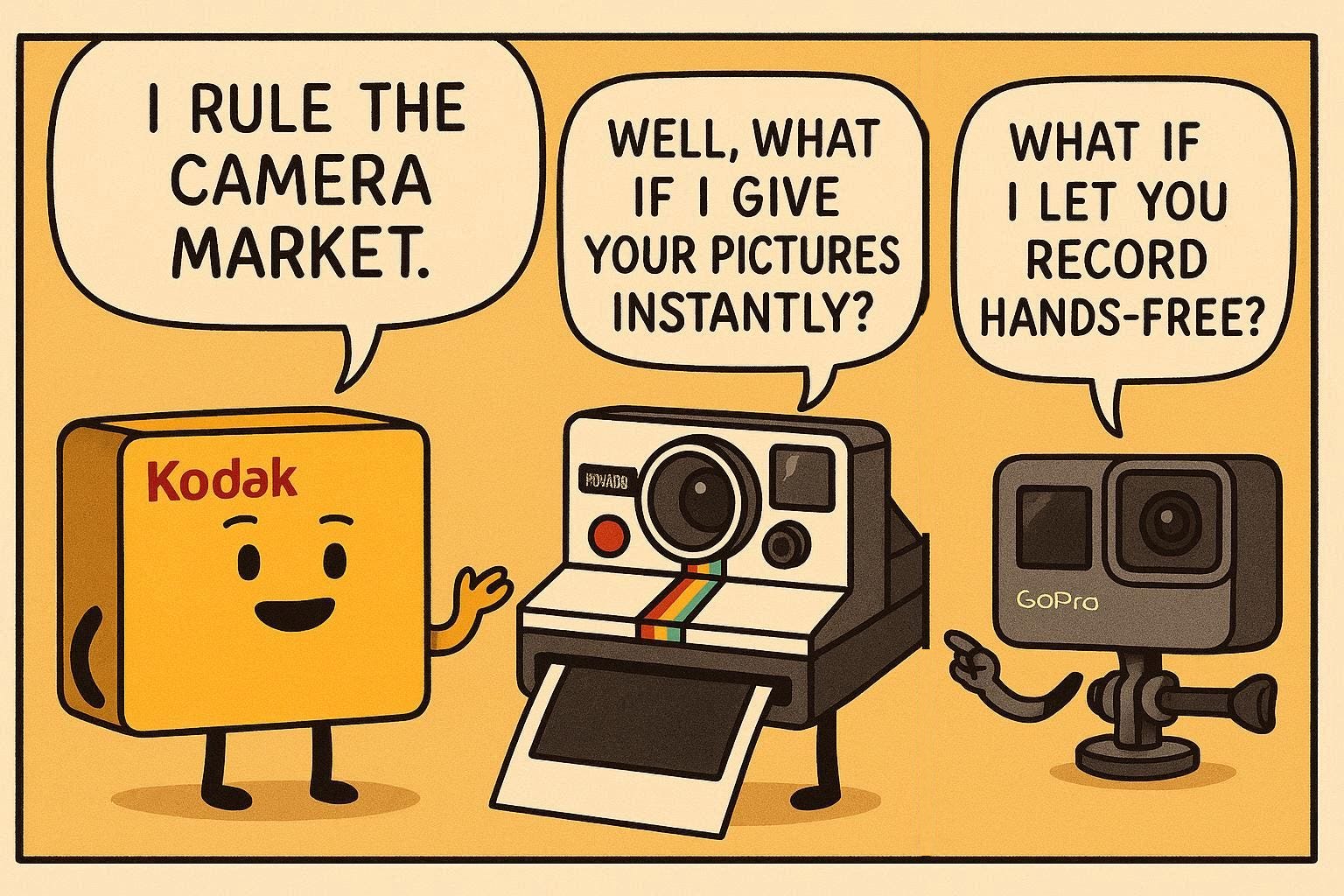
Each time, the brand didn’t fight the leader. It simply created a smaller space — and then became first in that new category.
You can do it for yourself too.
If you still insist on competing in the same category as the first mover…
Don’t worry, there is often room for a second brand, of course if it is not taken already. Customers like choice, and many categories support two major players:
- Coca-Cola & Pepsi
- Nike & Adidas
- Visa & Mastercard
- Duracell & Energizer
If you think you can be the challenger and take meaningful share, go for it — but know it’s a different kind of fight.
How first-movers ruin their own advantage
It’s not easy for the second brand in a category to take down the first-mover. However, it seems like first-movers are very willing to do it for them.
When companies reach a certain market share and stay at the same level for a couple of years, 10-12 executives gather around a table and the most clever one says:
“Let’s use our strong brand name to spread into new categories that already have rocket sales!”
Sounds good, but it’s not.
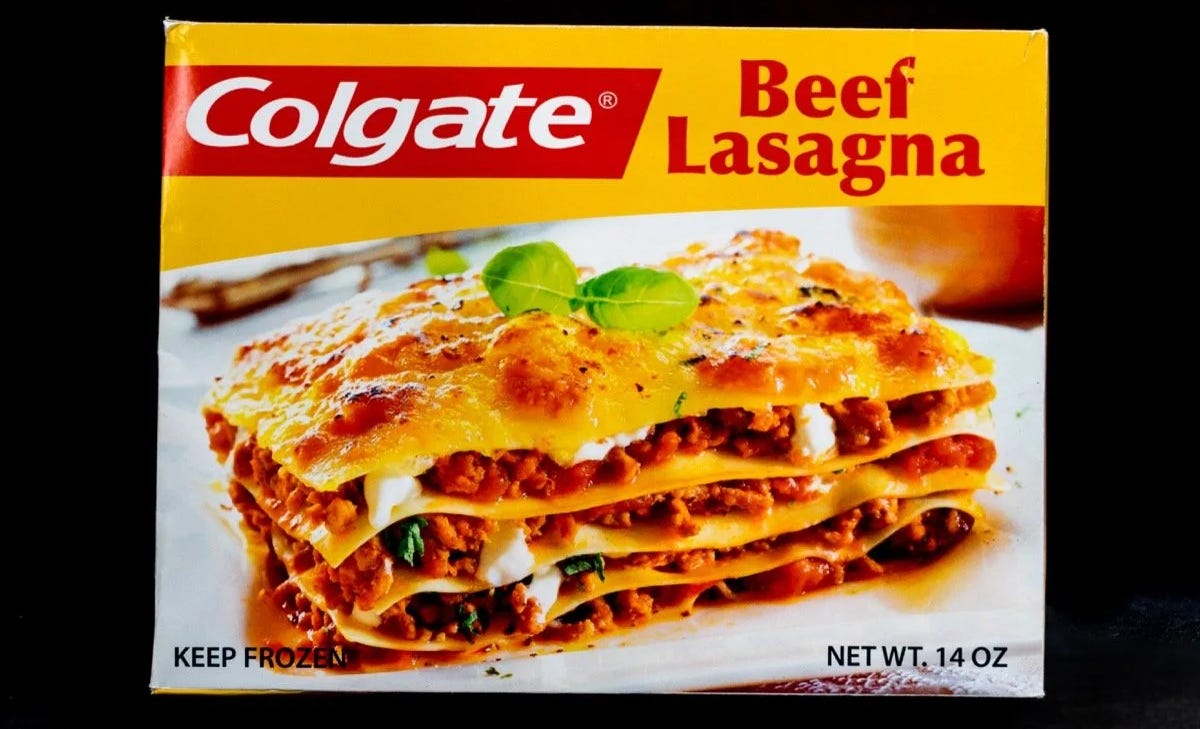
As I’ve repeated many times, a brand means having an image in the mind of a customer, and that image should be protected. If you use your brand name in ten different categories with 30 different products, which one will be associated with your brand name?
When you jump to other categories, you start to disrupt the meaning of your brand name in the mind of a customer. You make it easier for competitors to take a slice from your brand image.
I would love to use a quote from Al Ries and Jack Trout’s book here:
Less is more. If you want to be successful today, you have to narrow the focus in order to build a position in the prospect’s mind. What does IBM stand for? It used to stand for “mainframe computers.” Today it stands for everything, which means it stands for nothing.
(IBM has since repositioned around cloud/AI services)
Google is one of the companies that loves to name everything after itself. There’s even a website called Killed by Google documenting the many products the company has cancelled — many of them starting with “Google.” I wonder what would have happened to YouTube if they had named it “Google Video” or something equally forgettable.
So what should companies do? Should they just wait to be destroyed by another first-mover in a different category that’s alternative to theirs (like Apple’s iPhone did to other smartphone manufacturers)?
Of course not!
The right way to expand: Spread categories, not brands
Companies should spread into new categories, not brands.
P&G is a perfect example of this. They have tons of different products in tons of different categories — but they don’t use the strong name of P&G to establish “P&G Shampoo,” “P&G Soap,” or “P&G Face Masks.”
Instead, they use different brand names:
- Tide for laundry detergent
- Pampers for diapers
- Gillette for razors
- Crest for toothpaste
Each of those unique brand names captures a distinct place in customers’ minds.
Want to go into another category? Just go with a fresh name, fresh branding, and of course, be the first in the customer’s mind.
TL;DR
The race isn’t always to the fastest or the best — it’s often to the first.
When you’re first in a category, you don’t just get market share; you get to define what the category means. You become the standard against which everything else is measured.
If someone else got there first, don’t try to beat them at their own game. Narrow your focus, create a new category, and become first there instead.
And if you’re lucky enough to be first? Protect it fiercely. Don’t dilute your brand by spreading it across too many categories. Build new brands for new categories instead.
That’s how you win — not by being better, but by being first in the mind.